
Introduction
With the Helpful Content Update rolling out in March, the SEO game has changed. This update makes one thing clear: quality content is king. This is a concept that Google has hung its hat on for years and it couldn’t be more relevant than in 2024. For those looking to stand out in the SEO space, it’s crucial to grasp what this means with respect to your backlinking strategy.
Backlinks have always been important, acting like votes of confidence from one site to another. This has been an area that spammy SEOs around the world have been able to manipulate and exploit to some extent, generating a large number of backlinks on low quality websites, or setting up ‘fake’ websites that essentially act as link farms. Bit by bit, Google has managed to reduce the impact of these sorts of strategies, which ultimately benefits its users.
With the emergence of AI content tools, this same flock of spammers found another way to manipulate rankings; posting low quality, generic content at scale in an attempt to push their websites’ rankings.
Thankfully, the update challenges us to be more selective, focusing on backlinks that are not just numerous but relevant and high-quality. This shift means we need to be smarter about where our links come from. It’s about finding links that truly matter and add value, aligning with the update’s push for content that genuinely helps and informs users. It also means taking time to put out content that is genuinely helpful (the clue is in the name) and adding value to the user’s journey around the internet.
Moving forward, the goal of SEOs is to adapt our backlink strategies to meet these higher standards, ensuring our efforts lead to real, meaningful visibility in search results.
Defining the Helpful Content Update
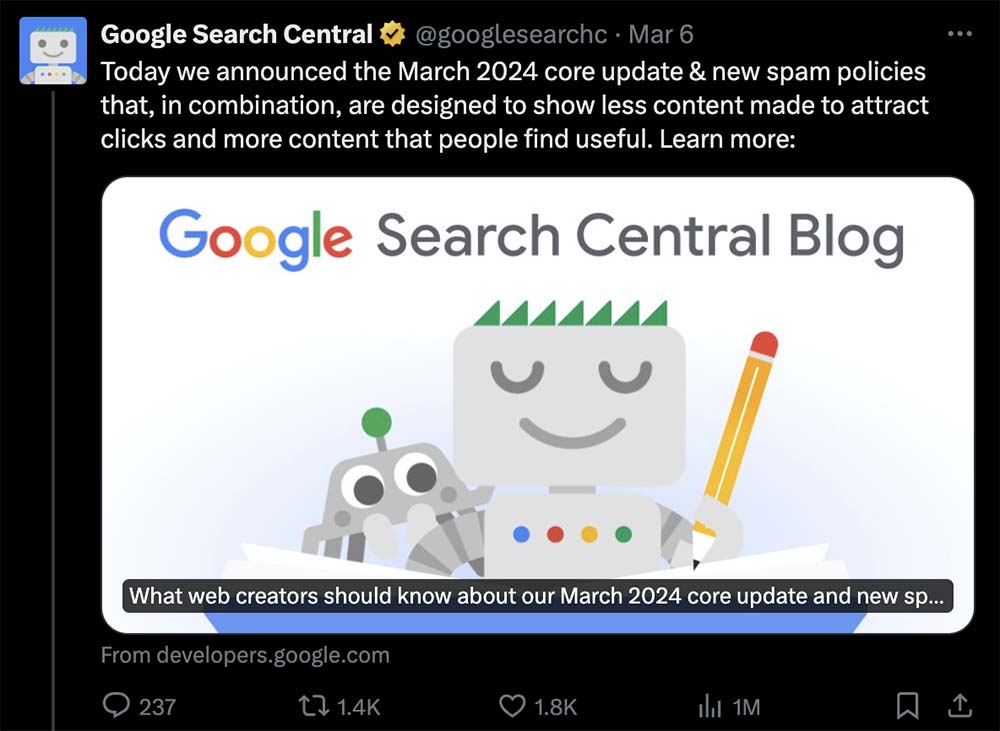
The Helpful Content Update is Google’s latest effort to ensure that the internet stays useful for everyone. It’s a nudge to websites and creators, reminding them that the best way to rank well is by making sure their content genuinely helps people. This update is all about rewarding content that’s informative, reliable, and, above all, valuable to users. Seems straightforward right?
In actual fact, this is a bit of a game-changer when it comes to content and backlinks. The update makes Google better equipped to figure out which content is truly helpful versus what’s being posted purely to game the system. It’s looking for content that answers questions, solves problems, or provides insights, not just pages stuffed with keywords or shallow information.
For backlinks, the update raises the bar. While link quality has always factored handily into the equation, we now need to be even more selective about the websites we collaborate with for links. Expect Google to have a more discerning eye when it comes to the following:
- Affiliate websites that act predominantly to refer traffic onto other more relevant pages
- Link farms that tend to post any kind of content for the right price
- Multi-niche blogs that don’t have a clear subject matter
- Content that is low value and poorly researched
- Content that has a title that encourages clicks (click-bait)
The message is clear; we need to be taking time to produce the best quality content we can and publish it on relevant, authoritative websites. Spammy content and going for easy, quick wins isn’t going to work anymore.
Vetting the Quality of Backlink Partners Post-Update
Backlink vetting should already have been an important consideration for digital marketing agencies and SEOs everywhere, however now it’s necessary to allocate more time and care to this piece of the puzzle.
We have already seen a bunch of content sites lose traffic over the past few weeks since the update rolled out and it looks like this is going to be a trend moving forward.
Here are a few ways to determine the quality of potential backlink partners:
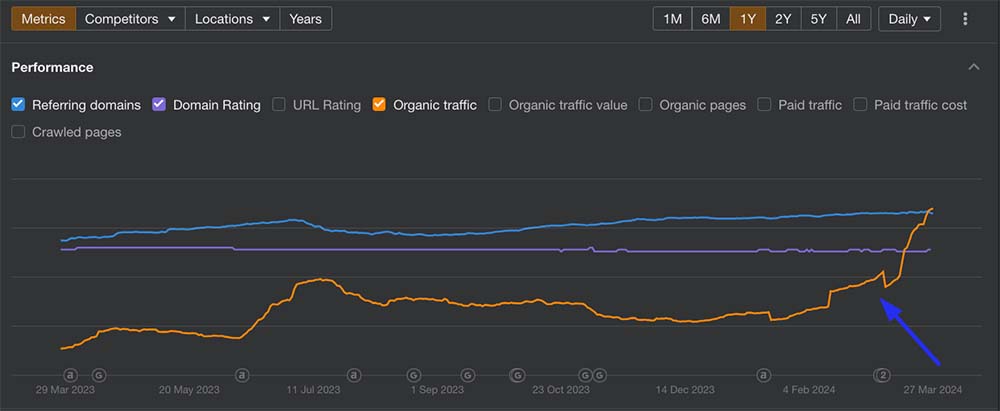
Check traffic with tools like AHrefs
If you see things drop off in March 2024 or trending down in general, this is probably a good sign that it’s one to avoid. Opt for websites that are trending up since the update, like in the example here:
Look for Transparency and Contact Information
Websites that transparently provide contact information, about us pages, and author bios demonstrate credibility and openness. This transparency is often lacking in lower-quality sites that hide behind anonymity.
Avoid websites with a ‘Write for Us’ section in the header.
While there are exceptions, if you see this there’s a good chance that the website is less selective in the content it chooses to publish. The more exclusive the link, the higher the quality.
Avoid websites with spammy content
This is a pretty obvious one, but the key is in quickly figuring out what counts as spammy content. If you see posts that seem to go against the subject matter, it’s probably not worth it. For example, a home improvement website that also has information about casinos, or beauty products or something in a completely different niche is a dead giveaway.
Further, if the content has numerous examples of heavy anchor text, perhaps you should be looking elsewhere.
Look for Social Media Activity
A strong, active social media presence can indicate a site’s authority and influence in its niche. Look at the number of followers, the level of engagement with the content, and the quality of the content shared on platforms like LinkedIn, Twitter, and Facebook.
Avoid websites that are heavy on the ads
Again there are exceptions to this rule, but if the website you are working with has ads here, there and everywhere, you might consider other options. While this alone doesn’t indicate a website is bad news (after all, often these ads are actually sold by Google), it may suggest that it doesn’t have a legitimate revenue stream other than producing content. It also makes for a poor user experience.

Content Quality is the Name of the Game
Read through the existing content on the website of your potential publisher. Does it provide value? Is it well-researched and thorough? Does it include relevant information and graphics to support the point that is being made? This is as good a sign as anything that you are about to earn a link that will help move the needle.
The effort required to produce content that meets the standards of reputable sites often involves thorough research, depth of information, and a clear demonstration of expertise.
Consider User Experience (UX) and Design
A well-designed website that offers a good user experience is more likely to be a reputable backlink partner. Poor design or a confusing layout can negatively impact user engagement and is often associated with lower-quality sites. Is the website nicely designed in a modern way or does it look cheap and dated?
Review the Site’s Backlink Profile
Use SEO tools to examine the backlink profile of potential partner sites. A site with high-quality, relevant backlinks of its own is more likely to be a valuable partner. Conversely, a profile filled with low-quality or spammy backlinks might be a red flag.
Conclusion
The implications of the Helpful Content Update for backlink strategies are profound. It demands a more nuanced approach to link building, where the emphasis is placed on securing backlinks that are not only authoritative but also contextually relevant and beneficial to users. As we navigate this new terrain, it becomes crucial to arm ourselves with strategies that align with the ethos of the update—strategies that prioritise the creation and promotion of content that serves a clear purpose and adds real value to the web. Vetting publishers and link-building partners couldn’t be more important in 2024 and hopefully, these tips put you in a better position to get the most out of your offsite SEO activities.
Happy link-building!
- Custom web design
- Secure and fast website solution
- Full management training
- Take control of your website
- SEO optimisation
- Reliable web hosting and emails
Article by Pankaj Shah: DCP Web Design London